
Nancy Guthrie disappeared in Tucson, and then the messages started. Let’s look at this case through the lens of investigative experience. They didn’t read like any ransom note I have ever read.
The Guthrie Messages Never Read Like A Ransom
That is the first thing that stuck out. A normal ransom note is simple. It is a transaction. You have the person. You want the cash. And you make the trade. The psychology behind it is just greed, plain and simple.
What happened here was different. It was a performance. The sender behaved like a director, not a kidnapper.
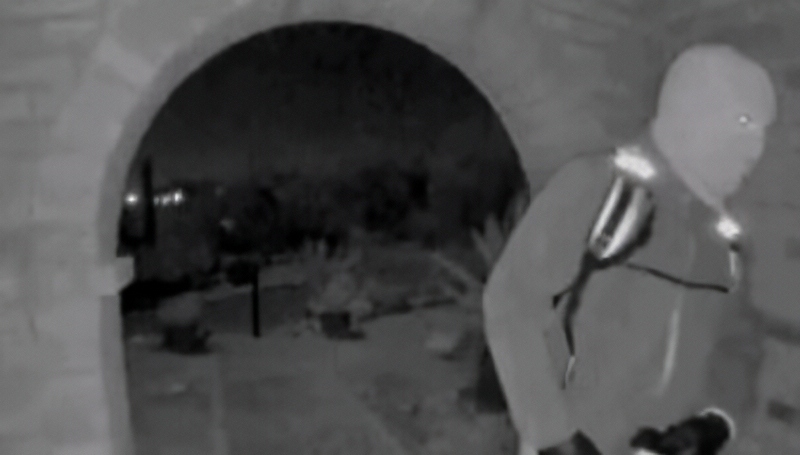
We hunt for the outliers first. This offender operates on a strange internal logic. A comparison to Kaczynski, (the Unabomber), is not one of violence or ideology. Rather it’s behavioral uniqueness and resistance to conventional profiling assumptions.
In a profile published by Dark Minds, Deadly Deeds, researchers note Kaczynski operated on a “rigid internal logic.”
The connection to Nancy Guthrie isn’t about violence. It is about psychological isolation. That is the key.
The Two Distinct Phases Of Communication
Let’s talk about the timeline. It breaks the case into two distinct phases of communication. They don’t match up.
The Daily Beast reports the first emails arrived between February 2 and February 3, 2026. The sender knew specific details.
They listed the exact drop-off time of 9:48 PM. They mentioned the garage door closed at 9:50 PM. And they even brought up a white Apple Watch on the bedroom floor and a broken floodlight in the backyard.
Police held those details back from the public for months. That tells you one thing. The sender appeared to have access to information that had not yet been publicly disclosed.
Then the whole dynamic changed. Fox 10 Phoenix reported a new note arrived on February 6, 2026. This one offered an “apology” for an “inadvertent death.”
That is a wild about-turn. The threat of violence turned into a retrospective confession. The script flipped completely.
Hidden Phone Changes The Psychology
By June 2026, the narrative went full movie theater. KRCR TV reported the sender messaged TMZ. The email claimed possession of a “hidden phone.”
The phone supposedly held videos, photos, and the names and addresses of two kidnappers.
Let me theorize here. Criminals don’t hide game-changing evidence for five months just to tease TMZ.
That sounds like a bad movie script. A rational actor who wants a payout doesn’t behave that way. It suggests something else. A grandiose narrator who is losing touch with reality.
We can sort the psychology of the Guthrie communicator into three distinct profiles. Let’s walk through them.
The Orchestrator (The Guilty Narcissist)
In this scenario, the communicator was directly involved in the crime but lost control of events. The details regarding the white Apple Watch and the broken floodlight suggest access to information that was not publicly available at the time.
Investigators haven’t publicly explained how this information was obtained,. However, its presence in the notes raises the possibility that the sender had direct or indirect access to the scene or to someone who did.
Under this interpretation, the “apology” for the “inadvertent death” may represent a narcissistic injury rather than genuine remorse.
The communicator is likely attempting to regain control of a narrative that has slipped beyond their grasp.
As forensic homicide expert Vernon J. Geberth details in Practical Homicide Investigation, the sadistic offender is often driven by a fantasy of total domination and control.
Such offenders may engage in acts of humiliation that serve as part of the behavioral signature. [Geberth, Practical Homicide Investigation, Chapter on Sadistic Homicide].
Furthermore, psychoanalyst Otto Kernberg described a spectrum of traits associated with malignant narcissism.
Individuals showing traits associated with malignant narcissism may demonstrate impaired empathy. And an intense need for dominance and control. [Kernberg, O.F., Borderline Conditions and Pathological Narcissism].
If reports that the Bitcoin wallet remained unused are accurate, it may indicate that attention or influence, rather than financial gain, was the main motivation.
The Panicked Accomplice (‘Double Bind)
The second possibility is the “Panicked Accomplice.” In this scenario, the communicator may have been present or possessed direct knowledge without being the main offender.
Under this theory, the conflicting messages that turn from a ransom demand to an apology, could reflect an attempt to manage fear, guilt, or exposure.
Investigative psychologist David Canter’s work on offender profiling suggests that criminal communications often reveal the relationships and interactions between offenders. [Canter, D., Offender Profiling and Investigative Psychology].
If the communicator were a panicked accomplice, behavioral consistency might begin to fracture as competing motivations emerge.
The increasingly elaborate explanations, such as the claim of a “hidden phone,” could represent desperate attempts to manage fear or to move blame away from the physical evidence they are actively hiding.
The Grandiosity Hoaxer ( ‘Movie Director’)
The third possibility is the “Grandiosity Hoaxer.” Under this theory, the communicator may have had no direct connection to the crime and instead constructed an identity based on publicly available information and media reporting.
Profiling guides and forensic literature note that hoaxers often “stitch together leaked information” to create a false sense of importance and access [Source: General Profiling Literature on Hoaxers].
Under this interpretation, the “hidden phone” claim, containing names, addresses, and videos, represents an elaborate narrative construct designed to maintain attention and relevance.
In this scenario, the sender may not be trying to hide a crime; perhaps they are trying to become the hero who solves it.
Why Traditional Criminal Profiling May Fail
If the communicator is an attention-seeking hoaxer, the effect isn’t just confusion; it’s a deliberate attempt to mislead investigators, families, and the wider community.
Psychoanalyst Otto Kernberg described a spectrum of traits associated with what he termed malignant narcissism.
These individuals often follow police briefings and news reports, then repackage those facts as “secret insider knowledge.”
They may crave proximity to the tragedy. They want the world to look at them, even if it means inserting themselves into a kidnapping case.
Forensic papers consistently distinguishes between offenders motivated by material gain (ransom)|: and those driven by psychological validation.
In the latter case, the communication itself is the product; the goal is to insert oneself into the narrative as a main player, regardless of the factual accuracy.
The distinction explains why the Nancy Guthrie case has baffled investigators: they look for a transaction (money for safety), but the sender is playing a performance (attention for control).
When the motive turns from profit to storyline dominance, standard profiling tools that rely on financial trails or logical negotiation break down.
We may be dealing with a narrative architect. And the script may still be running.
Your thoughts? Let us know in the comments below, and remember to come back here often for all your true crime news and updates. Plus, we have a TikTok crime channel that you can follow.