
Nancy Guthrie: Looking Beyond The Ransom Notes
The newly released notes may reveal more about the killer's strategy than Nancy Guthrie's fate.

- 0Facebook
- 0Twitter
- 2Pinterest
- 0LinkedIn
- Total2

On Monday this week, news about Nancy Guthrie and the ransom notes dropped like boilerplate stories by major mainstream media. After months of silence, that might make true crime followers suspicious. Is it a distraction?
Smoke and Mirrors
The coordinated release tells us something vital. The ransom notes were never a genuine attempt to collect money. Instead, they appear to have been a carefully planned smokescreen.
The perpetrator didn’t write them to open negotiations. More likely, they wrote them to send investigators down a dead-end street.
Certainly, the person who was involved seems to have wanted to steer the police away from the physical evidence and mask a deeply personal crime.
Evidence of a Scripted Abduction
Kidnappers usually want to talk. They negotiate because they want the payout. Via Hello!, legal expert RJ Dreiling points out that real extortionists follow through.
In the Nancy Guthrie case, the trail went cold immediately after the first Bitcoin demand.
The unknown suspect never touched the small test amount sent by investigators. Entertainment Weekly describes it as a “critical early misstep” by law enforcement.
The total silence after the initial contact strongly suggests the notes were a one-time tactic designed to establish a false narrative.
Dreiling profiles the suspect as an intelligent but deranged individual. The kidnapper possessed enough skill to clean the crime scene of DNA and fingerprints. Yet, the ransom notes were loud and theatrical.
This creates a sharp contradiction. Why would a methodical, silent suspect suddenly make so much noise?
The second note, sent on February 6, claims an accidental death occurred. It reportedly said that Nancy was “buried with nature.”
The writer offered to trade the body for cash. But the perpetrator never tried to arrange a drop. A real criminal doesn’t write an elaborate apology note to close a business deal.
Instead, it seems as if the script was written to end the investigation, not to open a financial transaction.
Moving Focus to the Background
The theatrical $4 million demand worked perfectly at first. It drew eyes away from the real evidence.
Everyone was chasing crypto leads. Meanwhile, the physical evidence sat right there.
Black glove, two miles out. Doorbell footage, someone in a mask by the house. And the kicker. Medical records gave them a precise window for when the pacemaker was cut.
These are concrete forensic facts. The kidnapper needed a massive distraction to make people look the other way. Early reporting led many observers to believe the DNA on the discarded black glove could belong to the suspect.
However, the lead quickly fell apart. Reports published by CNN clarified that further DNA analysis actually matched a local restaurant worker.
Cops looked at the employee. Quickly ruled them out. Just another dead end dressed up as a promising lead. A reminder that everyday junk can muddy a crime scene just as well as anything else.
The perp wanted this to look like a high‑stakes financial play. Make the cops chase global syndicates, organized gangs. Textbook stuff. But the details don’t fit that script.
They point closer to home, a grudge, or something uglier. Dreiling floats the John Hinckley Jr. and Jodie Foster thing. Different crime, same kind of twisted fixation. If Dreiling’s theory is correct, the offender may be local or someone familiar with the family.
The chaotic ransom story may have allowed someone familiar with the victim to blend into the background noise of the investigation.
The Purpose of the Blackout
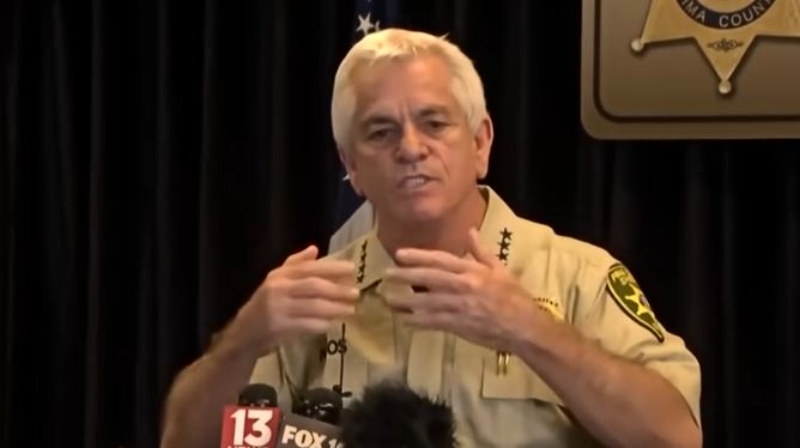
Law enforcement and the Guthrie family kept the two credible notes secret for months. Pima County Sheriff Chris Nanos explained that withholding the details was a calculated decision to “protect our case.”
The embargo served a dual purpose. First, it kept specific phrases like “safe but scared” and “buried with nature” hidden. If a copycat or the real killer sent a new message, investigators could use those secret phrases as a password to verify the sender.
CNN and local Arizona stations like KOLD agreed to hold the details to protect the integrity of future contact.
The strategy changed when authorities realized the notes were a dead end. It can be presumed that the killer used them as a burner tactic and then discarded the persona.
When the embargo lifted this week, the networks simply read from the old script because its usefulness to the investigation had expired.
Even media accounts showed friction during the release. Fox News reported that Harvey Levin of TMZ pushed back against early narratives, clarifying that the ransom note itself did not hold the apology or the death claim.
Levin stated those specific details came from separate informant emails. The scramble among major networks to patch the story together shows how tightly the secret was kept.
Looking Past the Noise
The ransom notes may have functioned as a psychological operation. They were never a business deal. The $4 million demand appears designed to generate headlines and redirect attention.
The real story does not live in a Bitcoin wallet. It lives in the quiet details. The black glove, the doorbell camera, and the pacemaker timeline tell the true narrative.
If investigators are correct that the notes were merely a diversion, they may ultimately be remembered as a stage prop that distracted from the physical evidence.
Your thoughts? Join the disucssion and come back here often for more true crime news and updates. And remember, we have a crime channel on TikTok that you can follow.
Comments are closed.