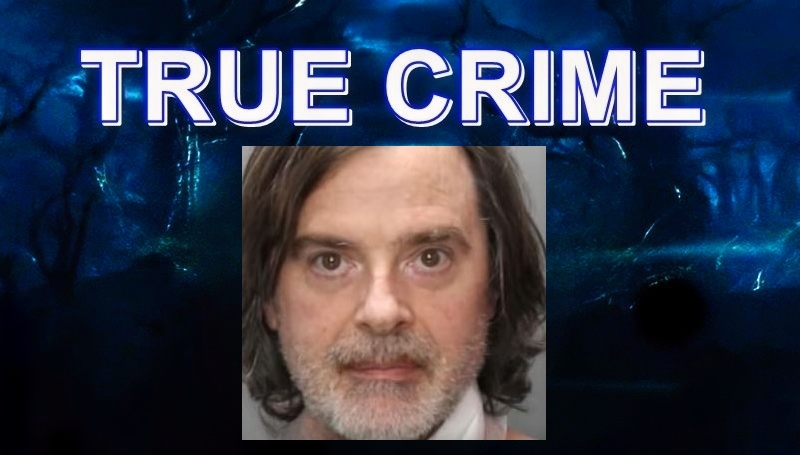
Bethlehem Township police arrived at a home in Pennsylvania in March and discovered Deborah Glaser dead in a bathtub. The claim by James Frank was that it was a joint suicide pact. Read on to find out why the judge rejected that claim.
Wellness Check
NBC10 Philadelphia reported that “a family member had told police they were concerned about the wellbeing of the people inside the house.”
Officers arrived at the 3rd Street home. Knocked. No answer. So they grabbed a ladder and went up to a second-floor window.
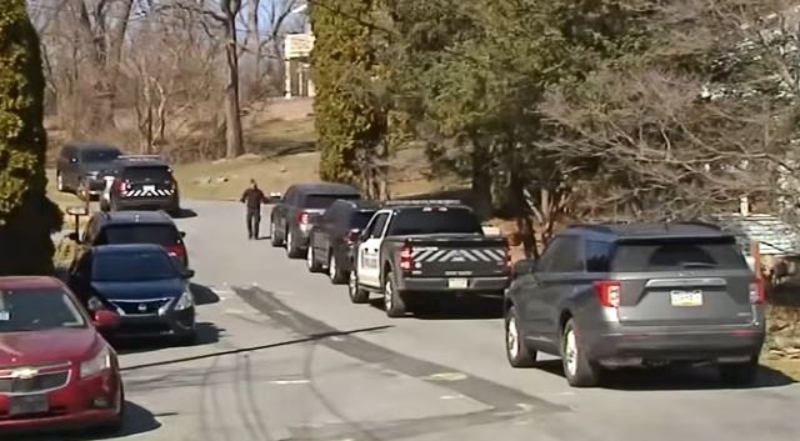
That’s when they met James Frank. He let them in and said, “My wife is dead in the bathtub.”
The Scene
Law and Crime wrote that Deborah Glaser had “a slashed throat and multiple puncture wounds to the chest.”
Her husband, 58-year-old James Christopher Frank, was arrested at the scene.
The Plea
More than a year passed. Then, on June 10, 2026, Frank pleaded guilty to first-degree murder.
But the real fireworks came later. A Northampton County District Attorney’s Office press release noted that his remarks came during a June 17 sentencing hearing before Northampton County Judge Brian J. Panella.
Frank claimed the killing was the result of a mutual suicide pact, saying it was prompted by his wife’s severe, uninsured medical pain.
He told the court, “Our intent was for me and Deborah to be found together and dead from suicide.” He added, “So, I completed her suicide attempt.”
The Claim Got Rejected
First Assistant District Attorney Robert Eyer didn’t believe Frank. “The defendant’s words at sentencing are of no consequence whatsoever,” Eyer said.
“He admitted to police and in court that he brutally murdered his wife using a steak knife to cut her throat.”
The physical evidence contradicted Frank’s story. If a suicide pact existed, both parties would typically share the same outcome.
Frank was found completely uninjured. Police found weapons including knives, razor blades, box cutters, and a mallet.
He’d also stabbed Glaser multiple times, and he admitted that the death was intentional.
What Undermined the Defense?
District Attorney Stephen Baratta was cited by WFMZ as saying that “we can’t confirm how long she had been dead, but it was pretty clear that it was many hours prior to the police response.”
The extent of the injuries undermined the defense. It wasn’t a peaceful end to suffering. Instead, the evidence pointed to an intentional killing carried out by one party against the other.
PennLive reported that the court rejected Frank’s account. And even if a suicide pact had existed, “altruistic homicide” is not a recognized legal defense in Pennsylvania.
It’s just a label. Pennsylvania law doesn’t let you kill someone out of compassion.
Several strict rules make that clear. A conviction for first-degree murder requires malice aforethought, the specific intent to kill. The actions required to kill Glaser established that intent. Frank’s motive did not negate that conscious choice.
The Law’s Stance
The law doesn’t allow a citizen to end another’s life, even with consent, outside of specific statutory frameworks.
Per FindLaw, Pennsylvania keeps voluntary manslaughter on a short leash. Under 18 Pa.C.S. § 2503(a), it only applies if, at the time of the killing, “he is acting under a sudden and intense passion resulting from serious provocation by” the victim.
The test is objective: “whether a reasonable person, confronted with this series of events, became impassioned to the extent that his mind was incapable of cool reflection.”
YCLG notes that voluntary manslaughter also exists under 18 Pa.C.S. § 2503(b): “It’s not sufficient to show that the defendant acted out of an impassioned response; the timing is also a crucial factor.”
The Intent Was There
The way James Frank behaved literally dug holes in his story. He’d collected together the weapons for the death. Clearly, he’d planned it. And that shows calculation, not a loss of control.
With no wounds on Frank, multiple stab wounds were also difficult to reconcile with his claim that he was acting out of compassion. Instead it might have been triggered by rage or control.
Judge Panella wasn’t a believer in the defense, and the court decided it was a lie.
Frank was sentenced to life in prison without parole. The law effectively ruled that the alleged pact never existed.
Your thoughts? Join the discussion below, and come back here for more true crime updates and news. Plus, you can follow our crime channel on TikTok.