
Schubert Macarat: Florida Seeks Death Penalty In Case Where Victim Survived
Prosecutors are seeking capital punishment in a case where the victim survived and it could challenge long-standing US Supreme Court precedent.

- 0Facebook
- 0Twitter
- 2Pinterest
- 0LinkedIn
- Total2

In Lake County, Florida, prosecutors want to execute a man named Schubert Macarat. He is 41 years old. The victim in his case is still alive.
That single fact turns this local prosecution into a much bigger legal fight. Under current U.S. Supreme Court precedent, the death penalty cannot be imposed when the victim of the crime did not die. Florida is now trying to change that rule.
The Clash Over Capital Punishment
How can a person face execution when nobody died? The answer sits in a direct collision between state politicians and the U.S. Supreme Court.
Back in 2008, the Supreme Court decided a famous case called Kennedy v. Louisiana. In a 5-4 ruling, the justices declared that giving someone the death penalty for child rape violates the Eighth Amendment when the crime doesn’t cause death.
The decision held that, as a general rule, the death penalty could not be imposed for crimes against an individual where the victim did not die, leaving homicide cases as the primary category for capital punishment
Challenging A Precedent
Florida leaders decided to challenge that precedent head-on. In 2023, Governor Ron DeSantis signed a new state law known as HB 1297.
According to the Death Penalty Information Center, DeSantis told reporters he “believe[s] that that precedent was wrong” and said, “We do not believe the Supreme Court in its current iteration would uphold it.”
Lawmakers in Tallahassee wrote the legislation specifically to force a legal showdown. Senator Jonathan Martin sponsored the bill, telling colleagues that “the most serious crime like sexual battery on a child needs the most serious punishment.”
It is a strange legal reality when a state legislature passes a law knowing it conflicts with U.S. Supreme Court precedent, hoping the justices will later change their minds.
A Legal Test
The Schubert Macarat case has now become the state’s testing ground.
Deputies in Leesburg received a report about ongoing abuse in March 2026. WKMG News 6 reported that the young victim secretly used her own cell phone to record the assaults because “she knew that she would need it as evidence.”
Investigators eventually searched Macarat’s property. According to reporting from Lake County Florida News, officers seized a “4-terabyte external hard drive” containing over 3,000 videos, with at least 700 confirmed as “child sexual abuse material.”
A grand jury indicted Macarat on 47 felony counts in May 2026. The charges include 12 counts of capital sexual battery on a child under 12.
Prosecutors Push for Death
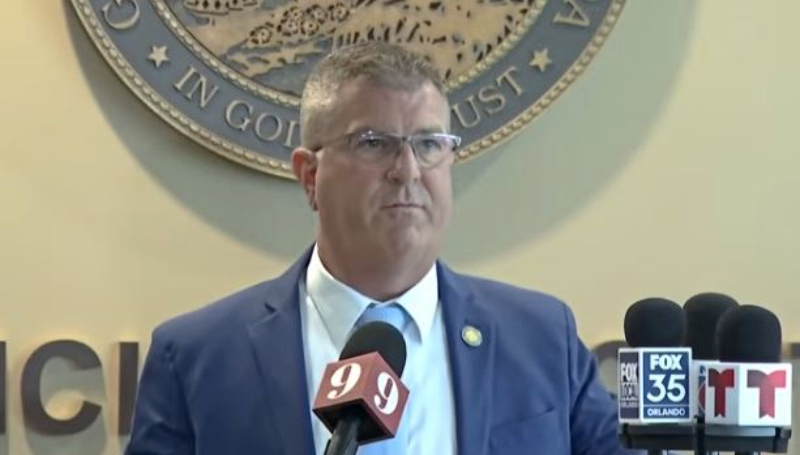
State Attorney Bill Gladson immediately signaled his intentions. Gladson filed a formal notice seeking capital punishment against Macarat.
“This kind of criminal depravity demands only one response from the State,” Gladson said in a statement. He added that prosecutors want “to prematurely end this defendant’s life because the crimes he committed are so heinous that no other punishment is fitting.”
In a video by WKMG News 6, local officials declared, “In this state we protect our children. In this state we protect our vulnerable. In this state we have zero tolerance for child predators.”
Schubert Macarat pleaded not guilty to all charges. He stays locked in the Lake County Detention Facility without bond while his attorneys prepare his defense.
Ripple Effects
The strategy behind the prosecution extends far beyond Lake County. Reporting from the Orlando Sentinel notes that this local proceeding “could pave the way for child rapists to be executed nationwide.”
Several other states are watching closely. According to records kept by the Death Penalty Information Center, states like “Tennessee, Idaho, Oklahoma, Arkansas, Alabama, and Mississippi” have recently passed similar statutes allowing capital punishment for non-homicide child sexual abuse.
Those laws remain on standby, waiting for a court case that can knock down the 2008 Supreme Court precedent.
If this case eventually reaches the U.S. Supreme Court, the justices could be asked to reconsider Kennedy v. Louisiana. If they chose to overturn or narrow that decision, states with similar laws could begin pursuing capital punishment in qualifying non-homicide child sexual abuse cases.
Other Considerations
Schubert Macarat’s ultimate fate may not rest solely on the facts of his case. It could also depend on whether nine justices in Washington decide to revisit the constitutional limits on the death penalty.
Your thoughts? Join the discussion and then come back for more crime news and updates, and remember we have a crime channel on TikTok you can follow.