
Rex Heuermann Guilty Plea Followed By Questions Over Family Therapist
The convicted killer's guilty plea closed one chapter, but questions about a therapist working with his family continue to bring discussion.

- 0Facebook
- 0Twitter
- 2Pinterest
- 0LinkedIn
- Total2

Rex Heuermann spent decades living a double life as a Manhattan architect while hiding a dark secret. That facade finally collapsed after his arrest, and this year he pleaded guilty to multiple murders.
But the story took another strange turn after a therapist working with his family faced criminal charges for allegedly practicing without a proper license.
Facing Justice
According to reports, Heuermann pleaded guilty to seven murders this year. A judge sentenced him to three life sentences plus an additional 100 years.
During the court appearance, State Supreme Court Justice Timothy P. Mazzei did not hold back. The judge looked directly at Rex Heuermann and called him “a disgusting and small man.” Mazzei added, “You’re a coward.”
Heuermann showed no real emotion. He stated that his own words would “have no meaning.” Reports indicate Heuermann will spend his remaining days in a state prison, though his specific facility assignment has not been publicly finalized.
That seemed like the final chapter. It was not.
The Unlicensed Expert
A bizarre detail emerged about the mental health expert working with the killer’s family. A panel on the Hidden Killers podcast broke down the situation.
Host Robin Dreeke shared that prosecutors have accused the therapist, identified as Allison Winter, of being unlicensed for clinical social work in New York. Dreeke, a former FBI counterintelligence operator, called the woman’s actions a “behavioral wobble.”
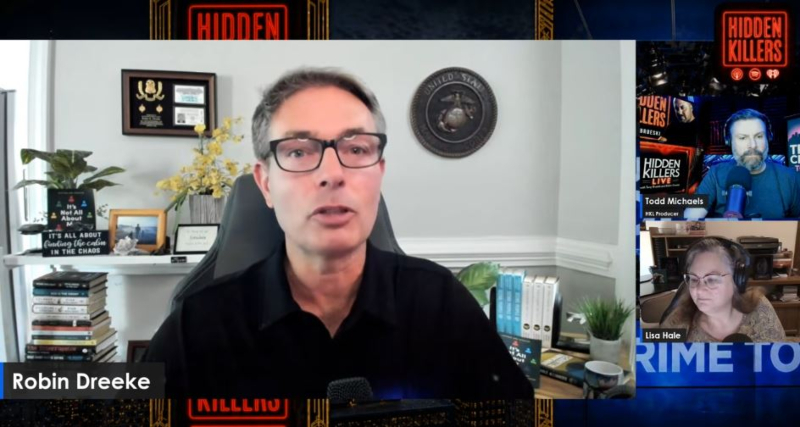
The panel criticized the therapist for appearing in a Peacock documentary and publicly discussing her clients. Some commentators questioned if an unlicensed therapist could ruin the prosecution’s victory.
Dreeke answered that directly. He stated that he asked both a prosecutor and a defense attorney about the matter. They gave a clear answer. The situation does not give Heuermann grounds for an appeal. It will not get him out of his guilty plea.
Glaring Mistakes
Still, the mistakes seem glaring. Dreeke argued that the prison system and the defense attorneys should shoulder some of the blame, adding that it was incumbent upon them to do basic due diligence. According to Dreeke, nobody checked her credentials.
Another part of the discussion focused on the therapist’s alleged advice to the family. According to reports discussed on the podcast, Heuermann’s wife, Asa, continued sleeping in the remodeled bedroom connected to the crimes at the therapist’s recommendation.
If accurate, the claim struck the panel as unusual, though trauma responses can vary widely.
Holding Back Truth
The case still has many loose ends. Prosecutors know one victim only as Jane Doe. Courtroom observers believe there are more victims out there. According to several accounts, Heuermann agreed to talk with the FBI’s Behavioral Analysis Unit.
But do not expect him to tell the truth quickly. Dreeke described Heuermann as a “psychopathic, narcissistic, self-serving, sadistic ass.”
He explained that information is the only currency the killer has left. Heuermann will likely dole it out slowly to keep the attention on himself. He wants the notoriety. That means families looking for missing daughters may wait years for answers.
Systemic Failures
Todd Michaels, another panelist on the show, pointed out a larger problem. He compared the investigation to the John Wayne Gacy case.
Michaels suggested that law enforcement often sweeps things under the carpet when victims come from marginalized backgrounds. In this case, many victims worked as sex workers.
Dreeke agreed that the system often fails vulnerable women. He explained that detectives often juggle 100 cases at a time. Dreeke argued that the cases that get resources are the ones with families making the most noise.
Trafficked women rarely have someone to be that squeaky wheel.
A Troubling Reality
Furthermore, police bosses face political pressure. Dreeke argued that supervisors demand fast arrest statistics to secure government funding grants. Building trust with terrified women takes immense time. The system simply does not allow for it.
Heuermann is behind bars now. He cannot hurt anyone else.
But the conversation ended with a question that is much harder to answer.
If one serial killer avoided capture for three decades, how many others have done the same?
Your thoughts? Join the disucssion and then come back for all your true crime news and updates. Also, remember you can follow our crime channel on TikTok.