
When AI Ends Up In Court: Legal Risks Users Rarely Consider
From facial recognition errors to chatbot conversations, artificial intelligence is creating new challenges for judges and prosecutors.

- 0Facebook
- 0Twitter
- 2Pinterest
- 0LinkedIn
- Total2

AI in crime interests a lot of people. And earlier this year, a federal judge in New York allowed prosecutors to view suspects’ conversations with a chatbot assistant.
It turned out one guy wasn’t chatting with an anonymous helper online. Because the courts said no to that misconception.
Confidentiality Assumptions
In 2026 in an OpenAI litigation, the Southern District of New York made it clear.
Bloomberg Law noted that Judge Sidney Stein wrote that because users “voluntarily submit” their communications, there is no reasonable expectation of confidentiality.
Interestingly, a legal beagle described it as,“the digital confession you didn’t know you were writing.”
Wriongful Arrest
Back in 2020, Robert Williams landed up arrested. A facial recognition system matched his face to a store theft video.
The match was wrong. He spent 30 hours in jail.
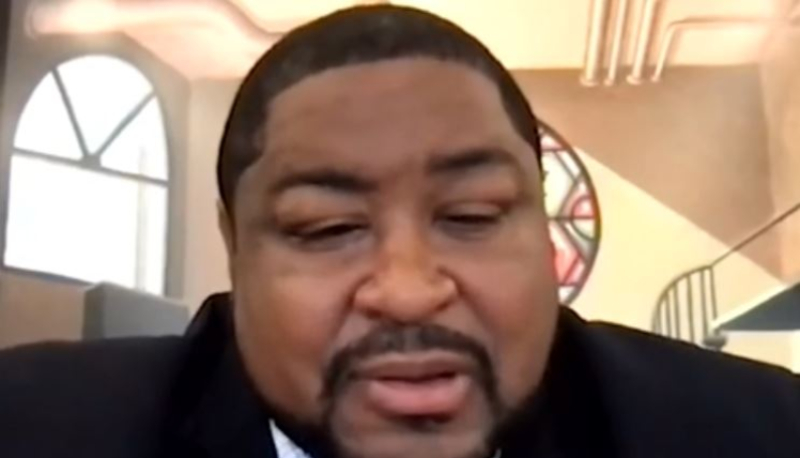
The city of Detroit agreed to a $300,000 settlement with Williams in July 2024 and adopted new policies, Per The Guardian.
Limitations On Police
Police can no longer make arrests “based solely on facial recognition results,” the University of Michigan Law School reported.
The New York Times noted that Williams was “the first person known to be wrongfully arrested based on faulty facial recognition.”
All three known wrongful arrests by Detroit police using this technology involved Black individuals.
AI Tool That Got Someone A Life Sentence
A Stanford Law publication discussed a tool called COMPAS. It helped convict a man named Eric Loomis of escape and attempted first-degree intentional homicide.
He got a life sentence.
Legal scholars raised points about the algorithm. It’s all rather secretive in nature. Those are important aspects deserving more scrutiny.
Notably, some defence teams question the black-box algorithms. And the possible problems of verifying any conclusive claims.
The Hearsay Loophole
Here’s the weird part. When a chatbot makes up a fact, a court might still let that fact in.
Not because the AI is telling the truth. But because the AI is not a person.
The hearsay rule only covers statements by human “declarants.” That creates a paradox.
A Stanford University study found that legal AI tools “hallucinate in 1 out of 6 (or more) benchmarking queries.”
General tools like ChatGPT provide fake information on legal questions between 58% and 82% of the time.
Yet that hallucination could enter evidence as a “fact.” Because no human said it.
AI Sometimes Fails
Most AI evidence still fails in court. A bare screenshot of a chat log proves nothing.
Courts want metadata. A witness who can say the log is real.
Can judges have some leeway? Well, it seems they can lock down on some evidence. If it potentially leans toward unfair prejudice.
People tend to trust computerized outputs.
That’s a problem when the machine just makes things up.
So go ahead. Ask your chatbot how to hide a body. Just know that a prosecutor might read it. And the machine that answered you gets to stay silent.
Comments are closed.