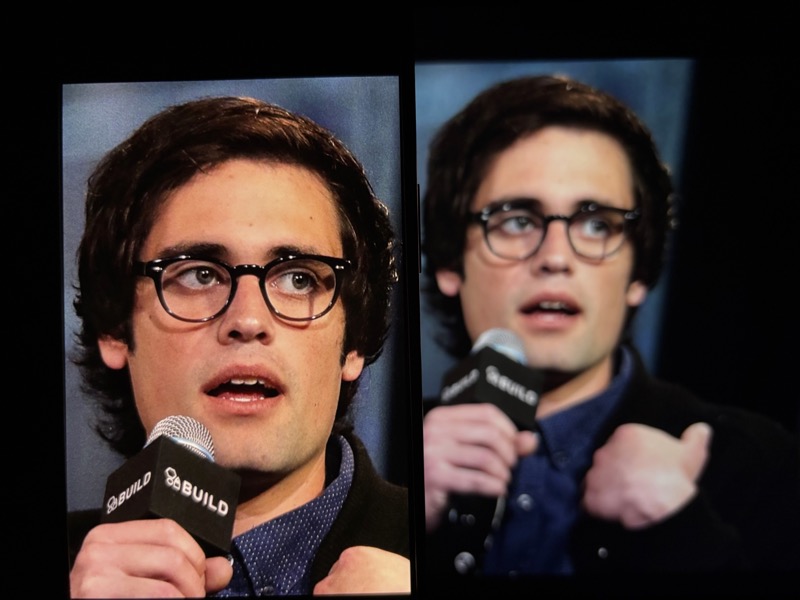
The courtroom scene on February 23 was quiet but tense as Nick Reiner appeared before a judge at Los Angeles Superior Court.
The 32-year-old, dressed in a brown jail-issued jumpsuit with a shaved head and facial hair, sat behind a glass barrier as his lawyer entered a plea of not guilty on his behalf.
According to observers in the room, Reiner’s demeanor remained largely unreadable. He acknowledged the judge only once during the hearing.
“He was looking around,” an eyewitness tells Us Weekly, “but beyond that smile, he was pretty emotionless.”
When Judge Theresa R. McGonigle asked whether he understood that he was waiving his right to a speedy trial, Reiner responded simply: “yes.”
The case stems from the brutal killing of his parents, filmmaker Rob Reiner and photographer-producer Michele Singer Reiner, whose deaths last December shocked both Hollywood and the public.
A Family Tragedy Unfolds
Rob Reiner, the legendary director of When Harry Met Sally, and his wife Michele had been married for 36 years.
Their lives came to a tragic end on the afternoon of December 14 when authorities say they were found stabbed to death inside their Brentwood home.
Their daughter Romy, 28, made the devastating discovery when she found her father’s body in the couple’s primary bedroom.
Nick Reiner was arrested later that same night and subsequently charged with two counts of first-degree murder. Prosecutors also added special circumstances alleging multiple murders and the use of a knife.
If convicted, he could face life in prison without the possibility of parole—or even the death penalty.
For now, Reiner remains held without bail at the Twin Towers Correctional Facility in Los Angeles. His next court appearance is scheduled for April 29.
A Case Shaped by Mental Health Questions
As the legal process unfolds, one issue continues to dominate discussions around the case: Nick Reiner’s mental health.
A source close to the situation says communication between Nick and his family has been nonexistent since the killings.
“Last I heard, the family has not been in communication with Nick,” a source tells Us. “They just cannot handle that at the moment.”
Another source told the outlet that Reiner, a screenwriter, has long struggled with schizophrenia and addiction. According to the source, he had recently dismissed his psychiatrist and changed medications shortly before the killings.
“The medical staff warned Rob and Michele not to let Nick live at home until he got his medication straightened out,” the source says. Despite those concerns, he had been staying in the guest house at his parents’ property.
The Night Before the Murders
One key moment investigators may focus on occurred the evening before the killings.
Both Rob and Nick attended Conan O’Brien’s holiday party that night, where witnesses reportedly saw the two arguing loudly.
TMZ reported that the confrontation became “very loud.” Another source described unusual behavior from Nick during the gathering.
Nick “was going up to people… asking if they were famous.”
Former L.A. district attorney R.J. Dreiling believes this moment could become a central piece of evidence.
“The prosecutor will use this as motive,” explains Dreiling, “and the defense will argue that he was mentally ill at the time.”
A Troubled History
Nick Reiner’s struggles with addiction and mental health were not hidden from public view. Both he and his father had spoken openly about them in the past.
In 2015, while promoting the film Being Charlie—a movie about a teenage drug addict that Nick co-wrote—Rob Reiner spoke candidly about the family’s efforts to help his son.
“We were desperate, and because the people had diplomas on their wall, we listened to them when we should’ve listened to our son,” Rob told The Los Angeles Times.
Reports from that time revealed the severity of Nick’s addiction. According to a journalist who spoke to The Hollywood Reporter, Rob and a then-sober Nick said he had been to rehab about 18 times and had at times lived on the streets.
Those who knew the family say the emotional strain lasted for years.
“Nick struggled emotionally from a very young age,” a third source tells Us.
Another source adds, “Michele was extremely protective of him and worried for him constantly.”
Addiction and Turbulence
Nick himself had previously spoken publicly about his experiences with addiction.
During a 2018 appearance on the Dopey podcast, he described a drug binge that occurred the year before.
“I was totally spun out on uppers — I think it was coke and something else,” he said, explaining that he stayed awake “for days on end” and ended up destroying items inside his parents’ guest house.
“I was up for days on end,” he said, adding that he “wrecked” everything there.
David Manheim, the podcast’s host, said he never expected the story to take such a dark turn.
“It’s very common [for addicts] to have animosity towards their parents,” Manheim told Us in December. “[But Nick] never struck me as someone who was capable of murder.”
A Pattern the Family Knew Too Well
Those close to the Reiners say the family had been locked in a difficult cycle for years.
“Michele and Rob did everything a parent could possibly do to help Nick,” a source told Us in December. “It became a cycle of seeking treatment for him, kicking him out, and him moving back in. This went on for years.”
Nick had also been placed under a mental health conservatorship between 2020 and 2021, according to The New York Times.
His sister Romy, in particular, had reportedly struggled with the tension surrounding her brother’s behavior.
“It’s been so much of their life. She’s been so traumatized.”
Legal Strategy and the Road Ahead
Legal experts say a not-guilty plea in a case like this is standard procedure while both sides review evidence.
Former federal prosecutor Neama Rahmani says the defense may attempt to argue insanity, but the legal bar for that defense is extremely high.
To succeed, the defendant must be “unable to tell right from wrong.”
Rahmani added, “if you’re capable [of having] an argument with your parents at a Christmas party, you are not insane.”
Other defenses could also prove difficult.
“It’s unlikely a juror will believe the son — who’s much younger — was at imminent risk,” Rahmani said when discussing self-defense claims.
He also cast doubt on a potential manslaughter argument.
“When you come back the next day with a knife, that’s too much time for a heat of passion manslaughter defense,” he explains.
“All signs point to premeditated murder,” Rahmani says.
Even so, he believes the death penalty is unlikely given that California has not carried out an execution in two decades. A negotiated plea deal could still emerge.
A sentence of 50 years to life, Rahmani notes, “would be a big win” for the defense.
Los Angeles District Attorney Nathan Hochman addressed the possibility during a February press conference, stating: “We take the process in which we determine whether or not the death penalty should be sought extremely seriously.”
A Family Left in Grief
While the legal process continues, the Reiner family is attempting to navigate an unimaginable loss.
Following the withdrawal of Nick’s attorney Alan Jackson in January—who cited circumstances that were “beyond” his and Nick’s control—the family released a brief statement.
They said they have “the utmost trust in the legal process and will not comment further on matters related to the legal proceedings.”
In the weeks since, Romy and her brother Jake have largely stayed out of the spotlight. They were seen walking together on a Malibu beach in late December and have reportedly been staying at a Malibu property owned by their parents.
According to one source, they are doing their best to support each other.
“Romy and Jake are leaning on each other, but they are struggling.”
The pain remains overwhelming.
“The family has been going through an exceptionally hard time since losing Rob and Michele. There are so many unanswered questions,” the source adds, “and so much grief.”
Be sure to catch up on everything happening with the Case Against Nick Reiner now. Come back here often for all spoilers, news, and updates on the Case Against Nick Reiner.